The Poly Brief

What the market thinks, and why

Every day, people around the world put money on what happens next: who wins an election, whether rates go up, whether a ceasefire holds. On the prediction market Polymarket, those prices are odds, and they move the moment something happens.

With Maya and Daniel. About ten minutes, every morning.

Follow the podcast

Latest episode ·

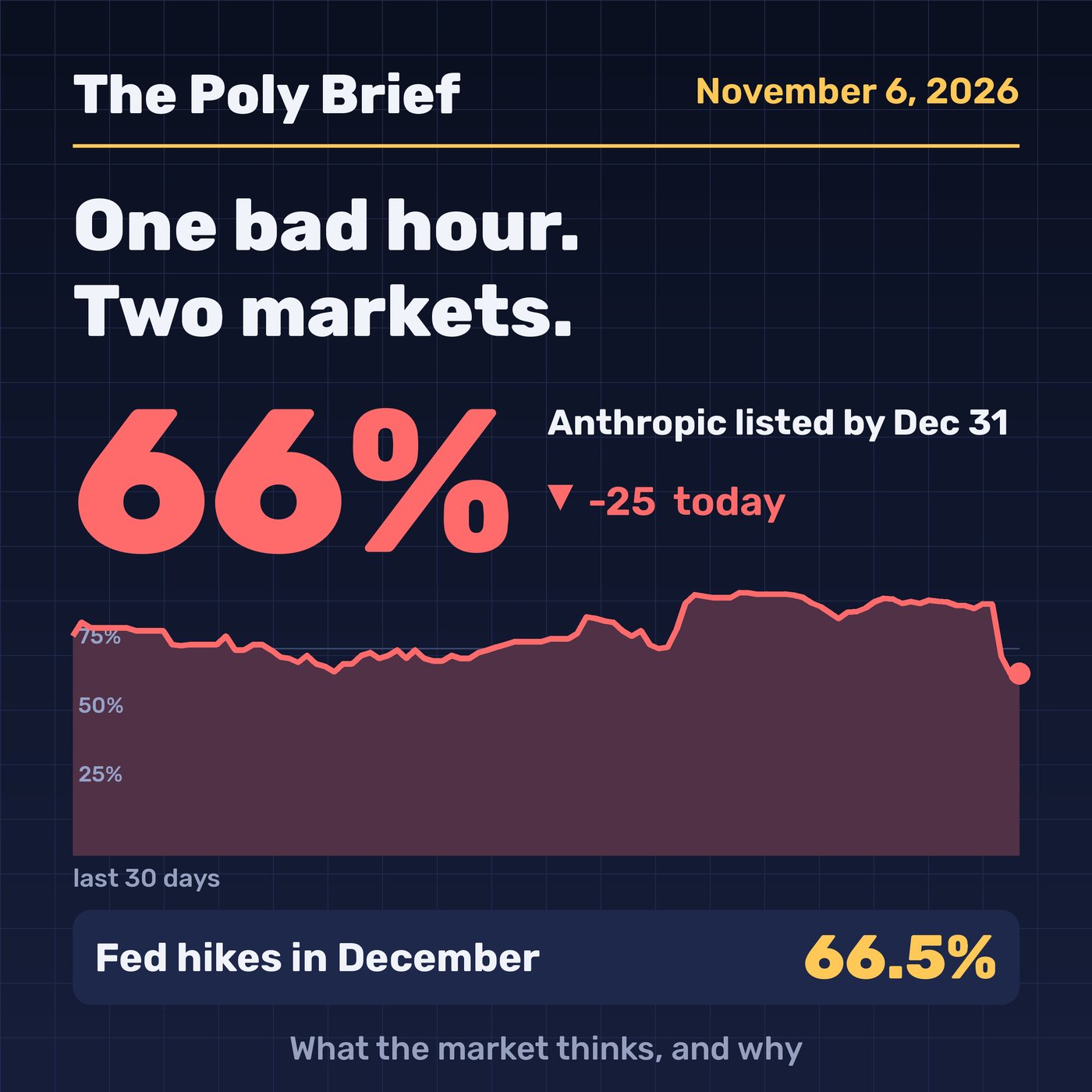
One bad hour. Two markets.

Nov 6: The AI selloff hits Anthropic's IPO, and the Fed hike in the same hour

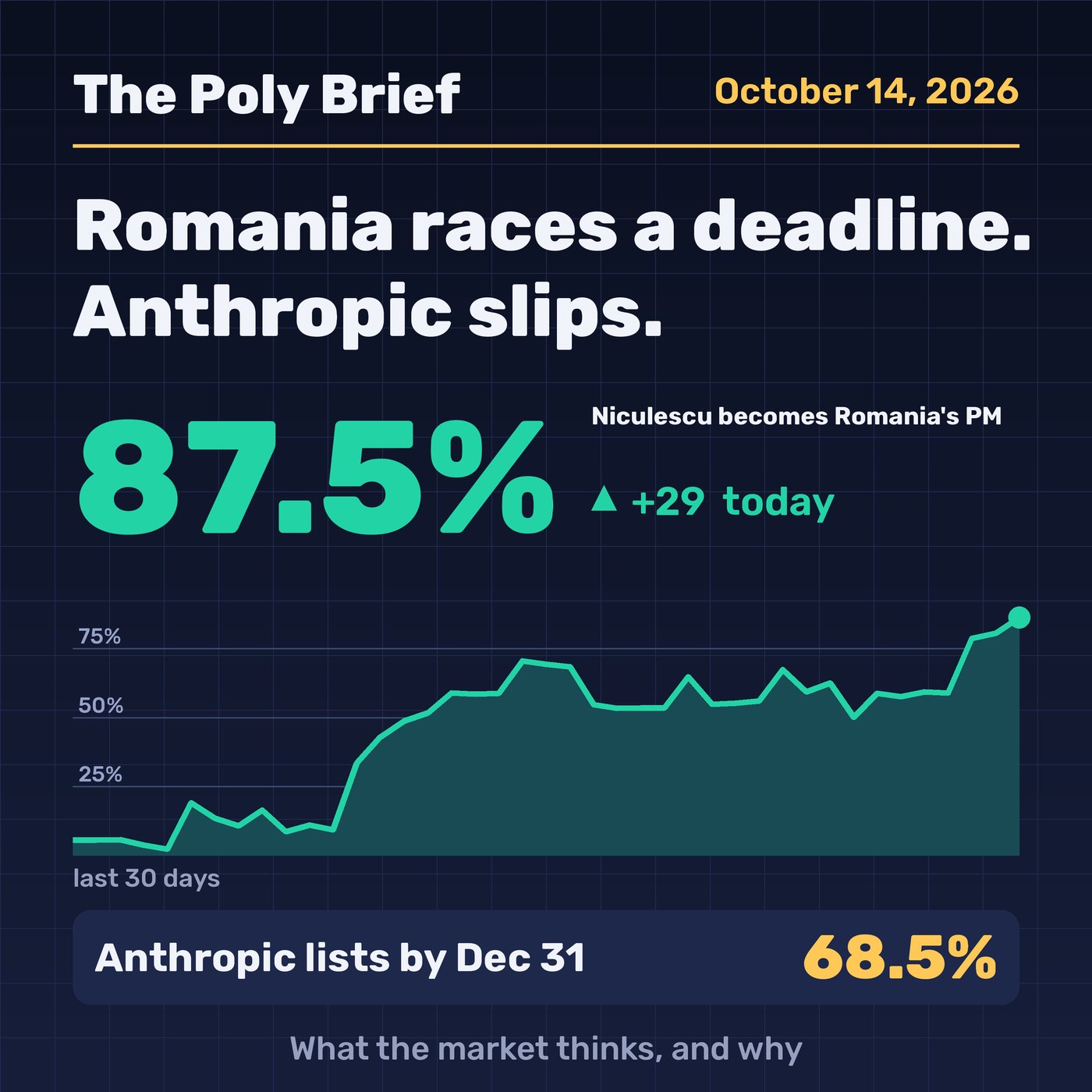
On Thursday the Nasdaq fell 5.5%, its worst day since April 2025, as the Democratic midterm sweep raised fears of pauses in data center construction. Within the same hour, two markets that have nothing to do with each other fell together. Anthropic listing by the end of the year: 66%, down from 91 that morning, after reports that big investors doubt a $1.5 trillion valuation and that the roadshow could slip. Plus the "AI bubble burst" market, and the fine print that makes a Yes much harder than a bad day. Disclosure: this script is written with Claude, an AI model made by Anthropic, so we stick to outside reporting.

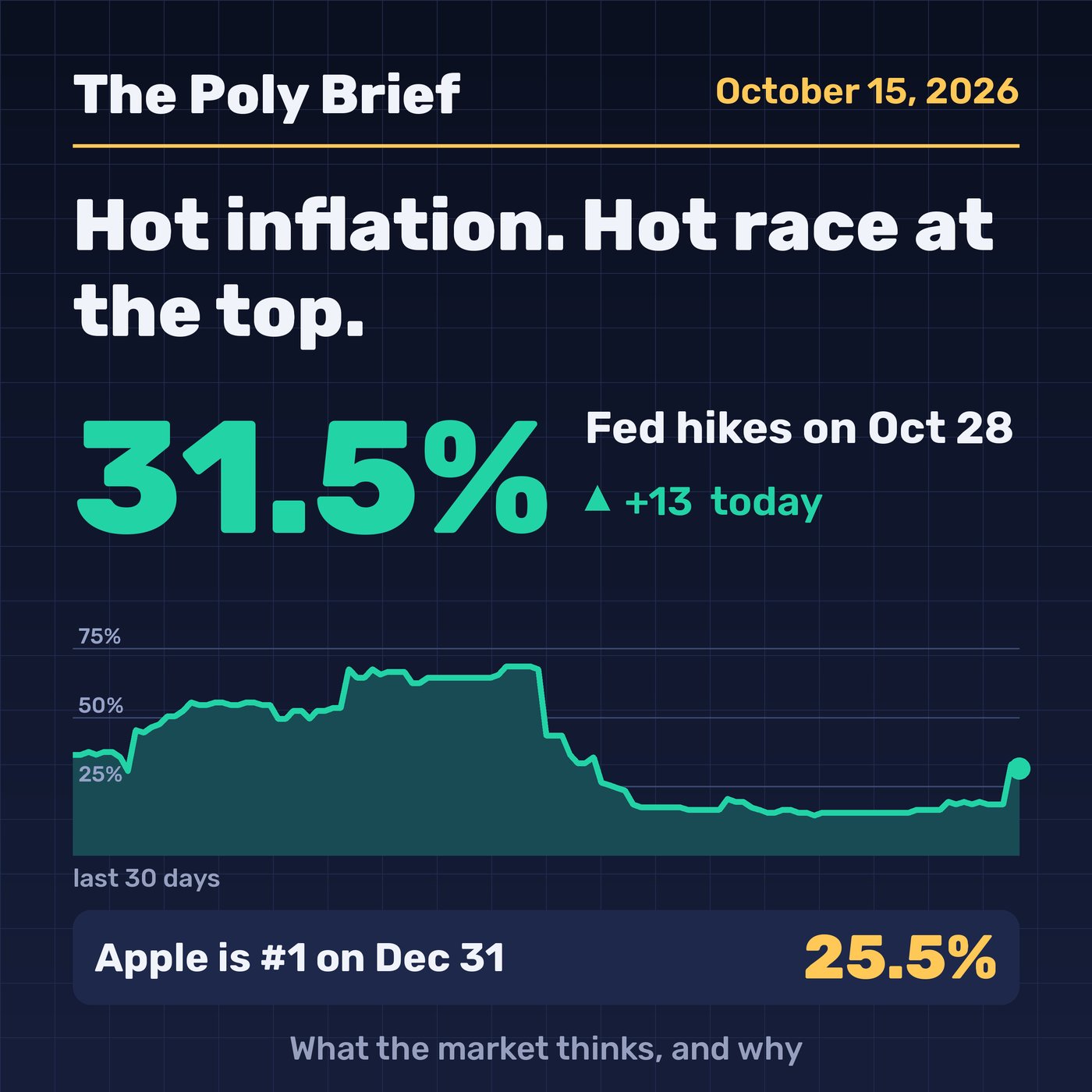
Then the Fed. A December hike fell from 78% to 66.5% in the same hour, with no Fed news and no data surprise. Why a stock crash moves rate odds, why traders still say hike, and the jobs report out today.

Listen to this episode

Markets in this episode

Odds at snapshot:

Anthropic IPO by __?

December 31, 202666%

▼ −25 today−28 7 days

December 15, 202664%

▼ −24 today−28 7 days

24h volume: $175K

AI bubble burst by...?

June 30, 202727.5%

▲ +4 today+5 7 days

December 31, 20268.5%

▲ +0 today−1 7 days

24h volume: $87K

Episode page, transcript and sources

Earlier episodes

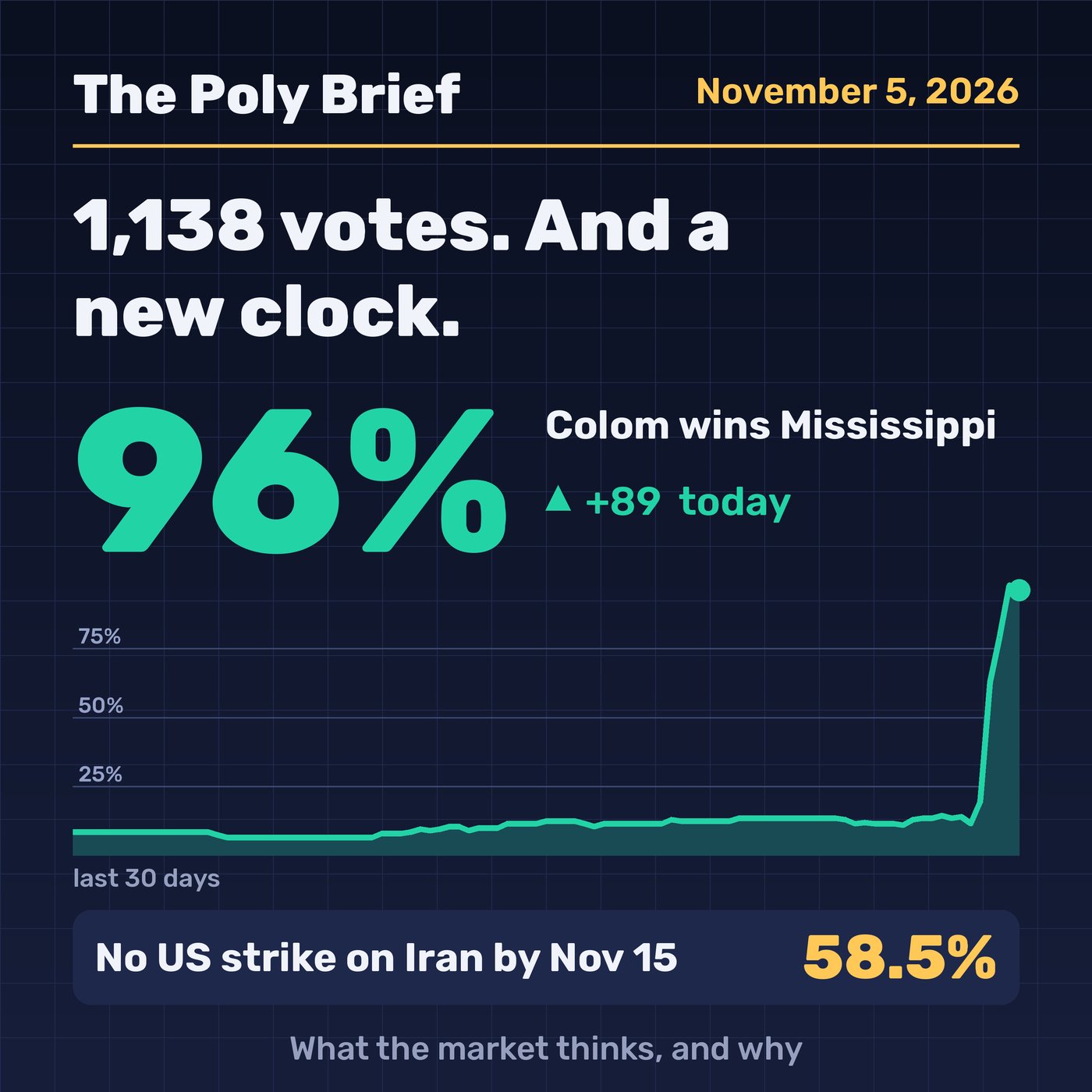
1,138 votes. And a new clock.

Nov 5: Mississippi's 1,138 votes, Alaska's math, and Iran's new clock

Yesterday Scott Colom led Mississippi's Senate race by 43 votes and the market gave him 80%. By Wednesday evening the lead was 1,138, and the market says 96. Why traders are so sure in a state with no recount law at all, what's still out (3,600 mail ballots, an unknown pile of affidavits), and how a tie would be decided: a coin toss. Then Alaska, where Mary Peltola is at 94.5% on a 626-vote lead, and the one analysis that says the ranked choice count could flip it.

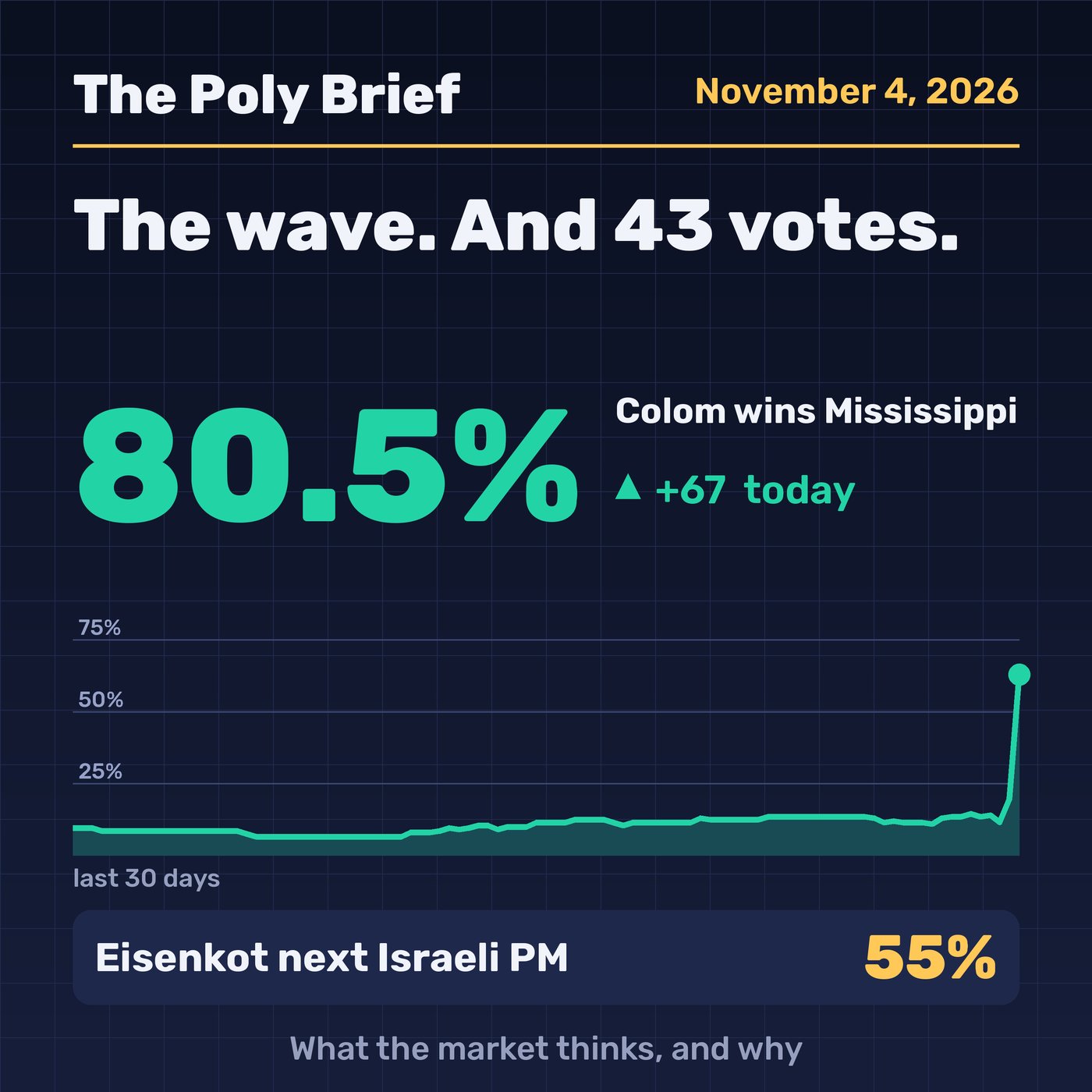
The wave. And 43 votes.

Nov 4: The wave, a 43-vote Senate race, and Israel's first mandate

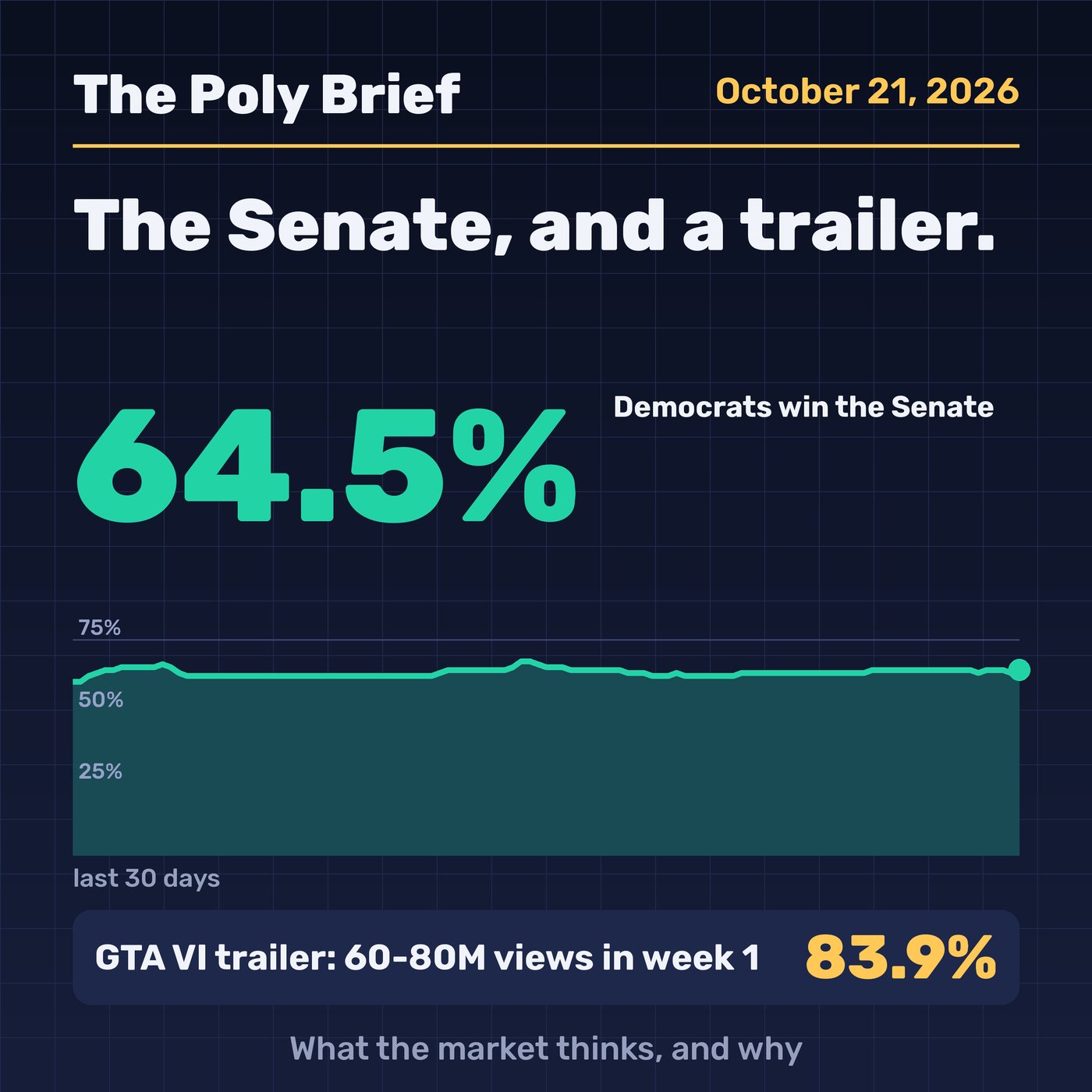
The morning after the midterms. Democrats won the Senate and the House, and we open the board on every call we made: the Senate at 64.5% two weeks ago, Kansas, Maine, Texas. And two misses, both in the same direction: Iowa, where the market had the Republican at 58%, and the Texas governor's race, where Gina Hinojosa beat Greg Abbott, the first Democratic governor there since 1990. Then Mississippi: at 11:30 at night the market gave Scott Colom 12%. Thirty five minutes later he led by 28 votes, and the market said 75. Now it's 43 votes and 80%. Plus Alaska, two Dan Sullivans, and the man with "zero interest" who is now the favorite for 2028.

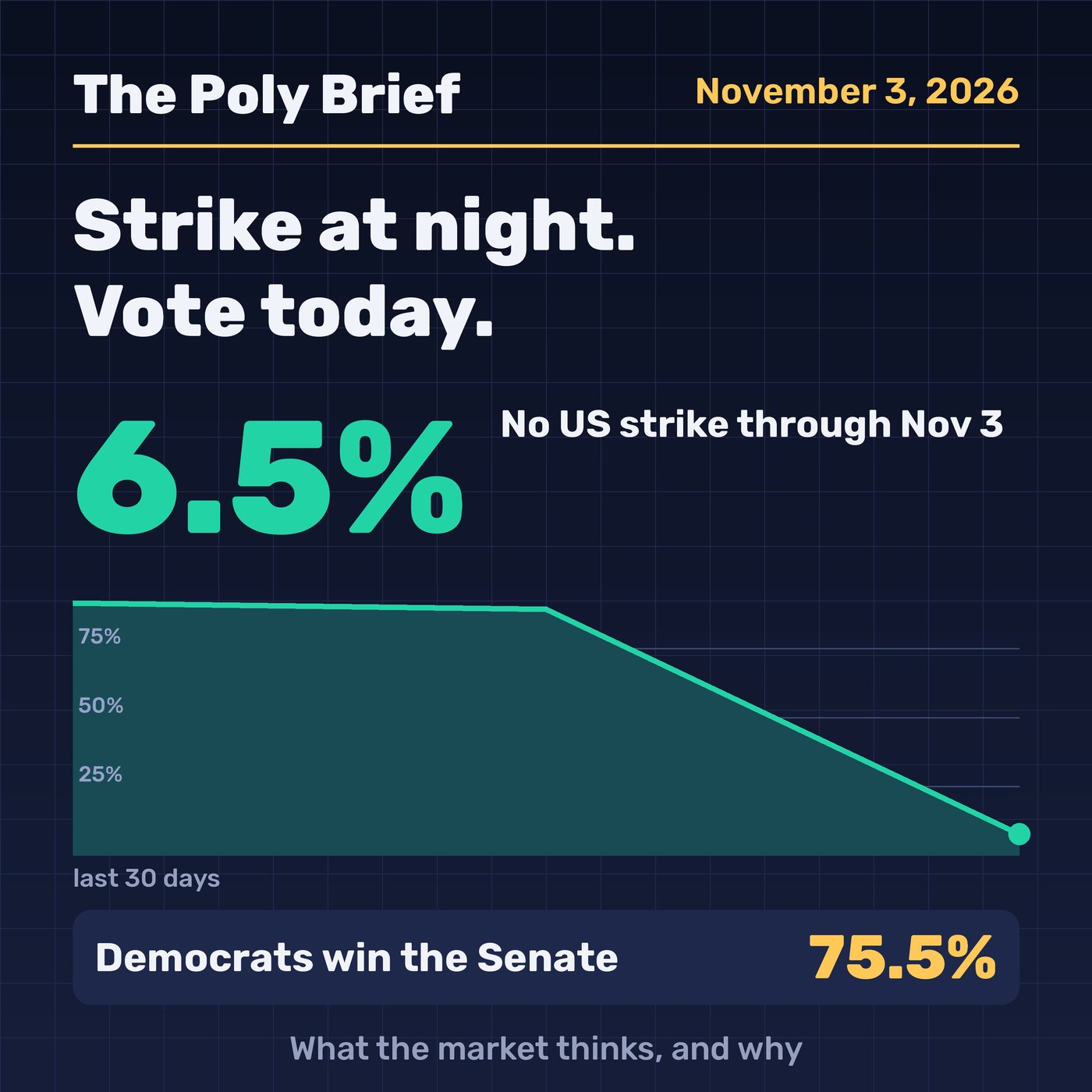
Strike at night. Vote today.

· 10 min

Nov 3: A strike on Qeshm, three hours of silence. And Election Day

Overnight, the US struck targets on Iran's Qeshm Island, in the Strait of Hormuz. Iranian media reported explosions just after midnight local time, and the market barely moved. More than three hours later, a report said the US did it, and in five minutes the bet that the pause holds through Tuesday fell from 92% to 53%. It's now 6.5%. Every date from November 4 on has already resolved No. Why "through November 2" is still at 64%, why even October 31, a date that's over, fell to 27, and what US officials call "limited defensive strikes".

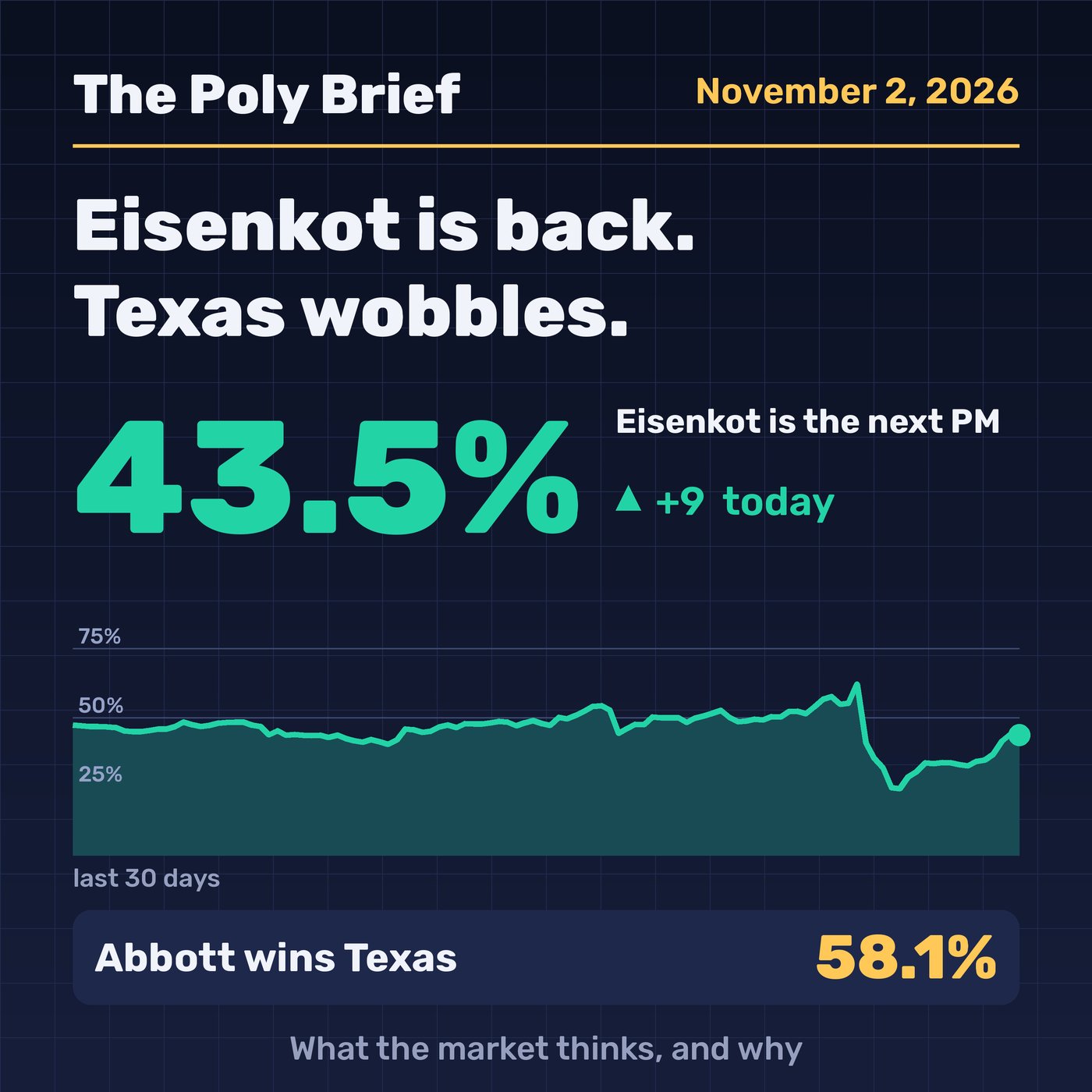
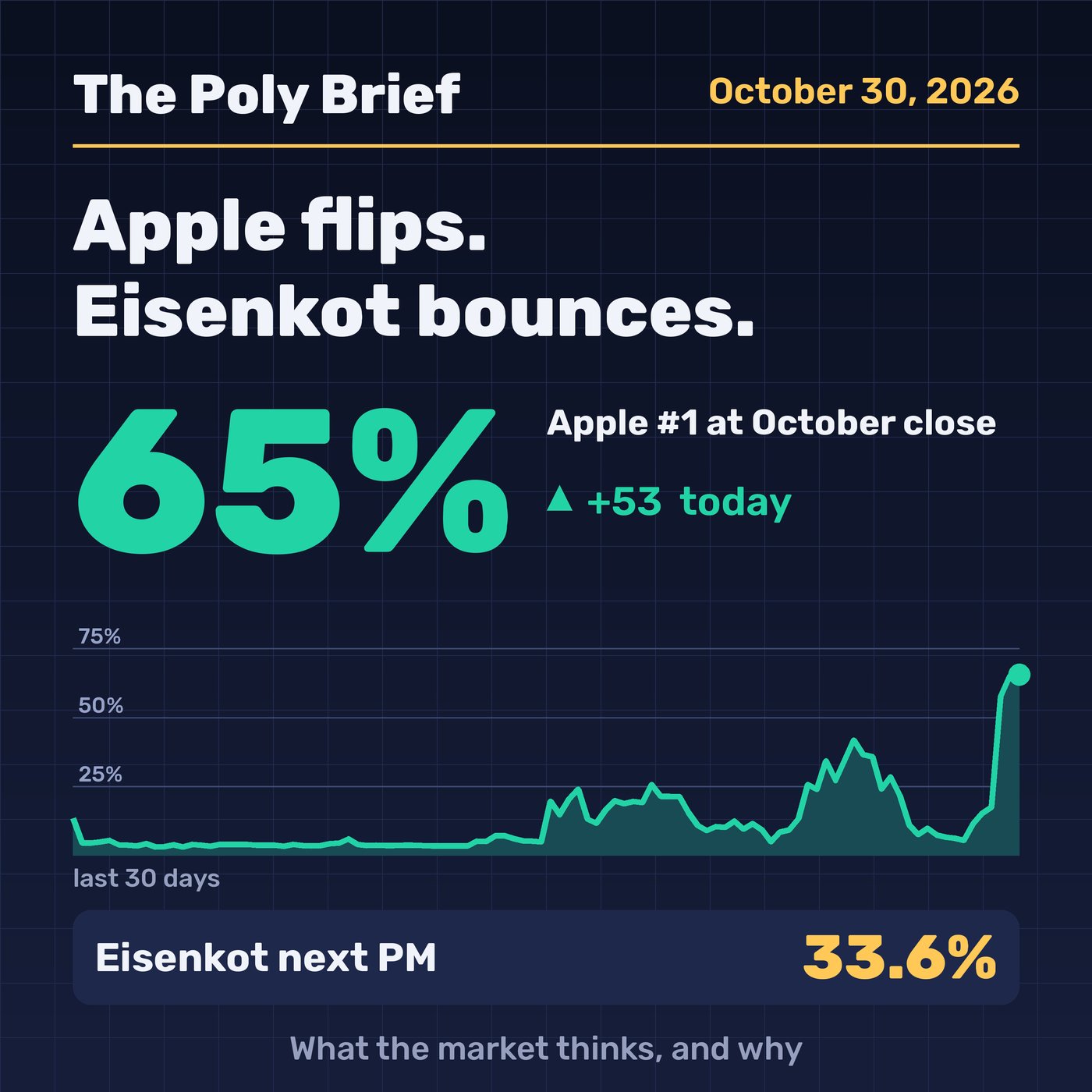
Eisenkot is back. Texas wobbles.

· 11 min

Nov 2: Eisenkot hits 50, then meets Lieberman. And Texas on the eve of the midterms

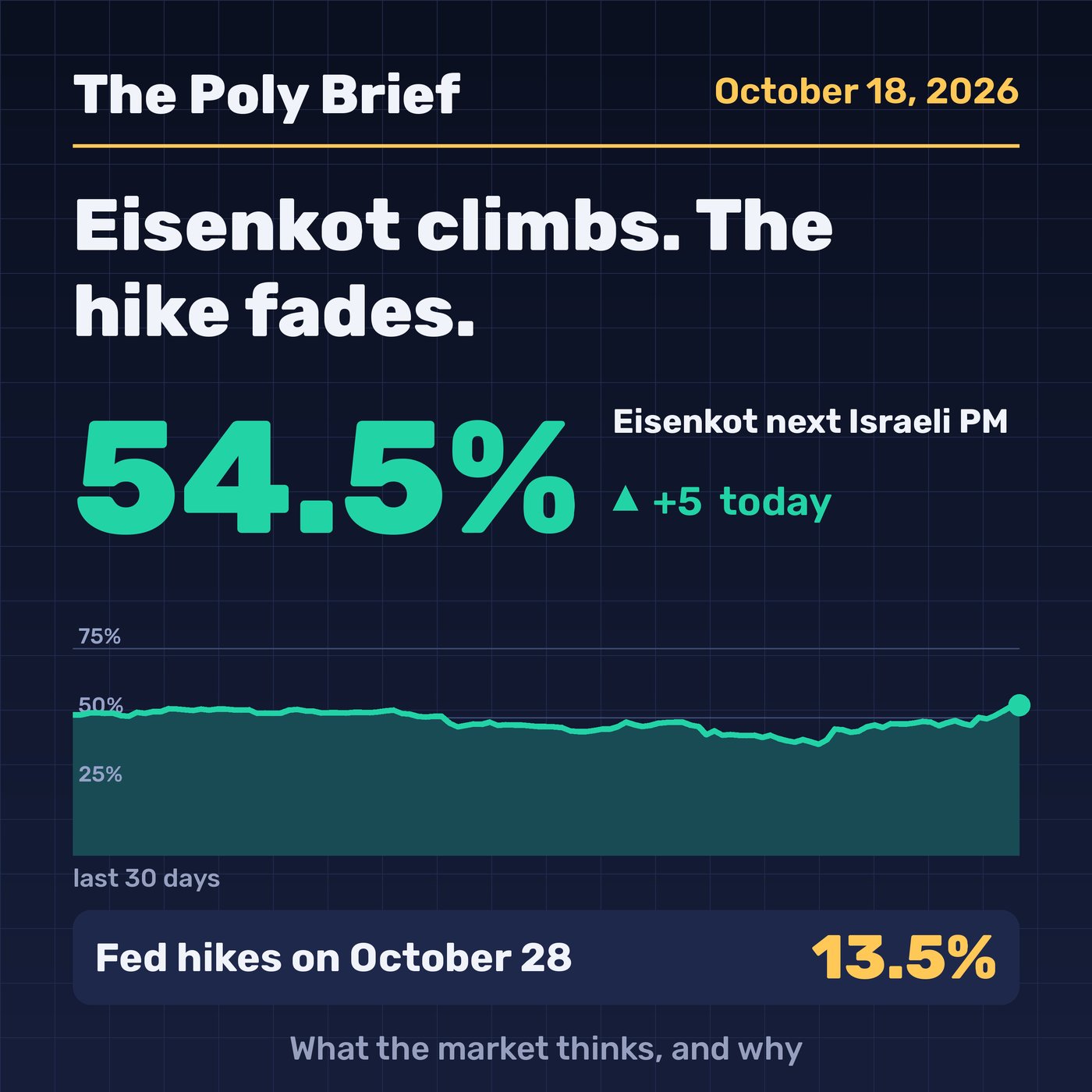
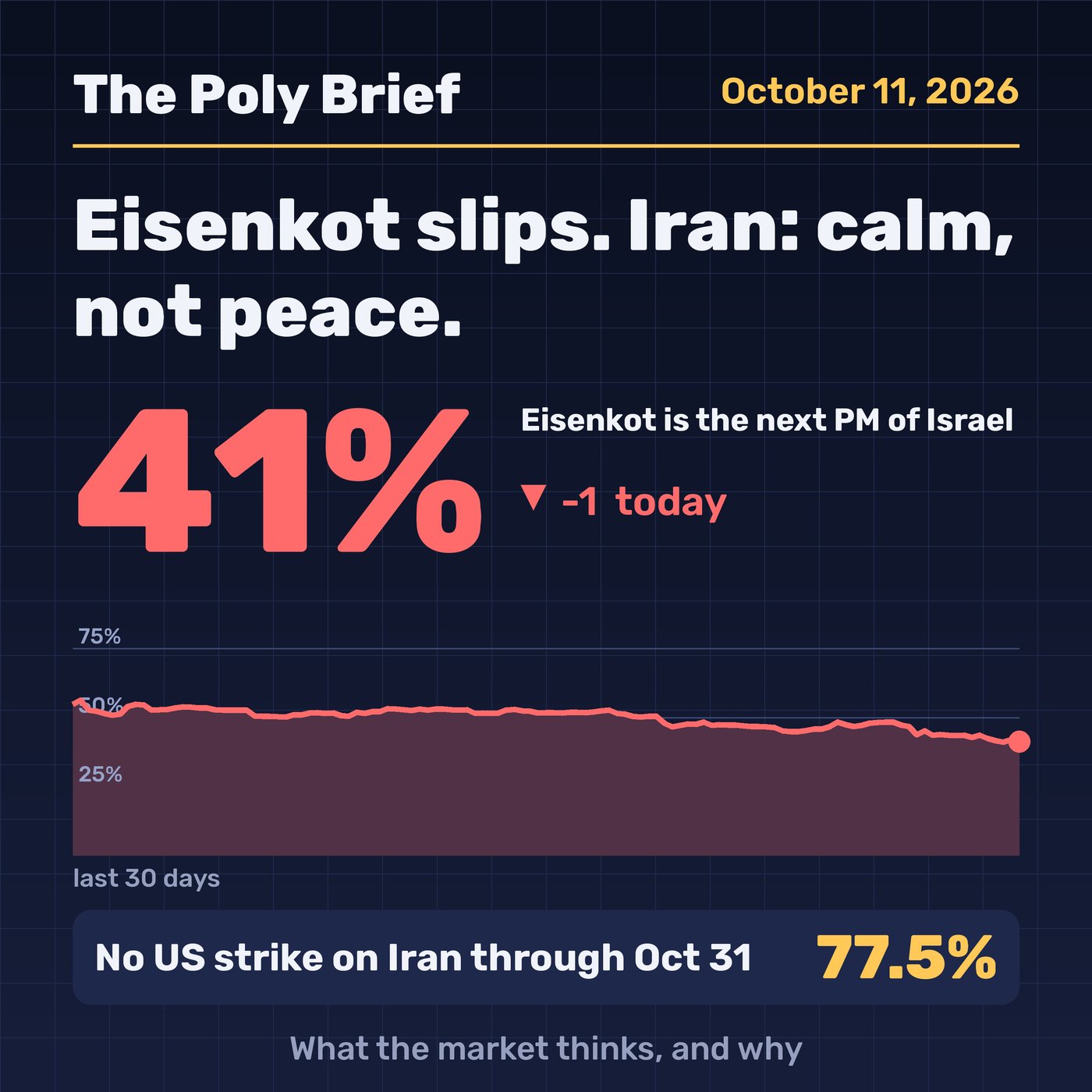
Israel's prime minister market flipped again. Gadi Eisenkot is at 43.5%, up nine points in a day, with Benjamin Netanyahu down to 35.5. On Sunday evening Eisenkot touched 50%, around the time Bennett's party said it will recommend him, on about $25,000 of trading. Then Ynet reported Avigdor Lieberman's line against a minority government, and by eleven at night he was back at 43. Why the market moves: a minority-government plan that runs on abstentions, an undecided Haredi party, and a president who wants a unity government. Plus Who Called It: the Likud's seat count.

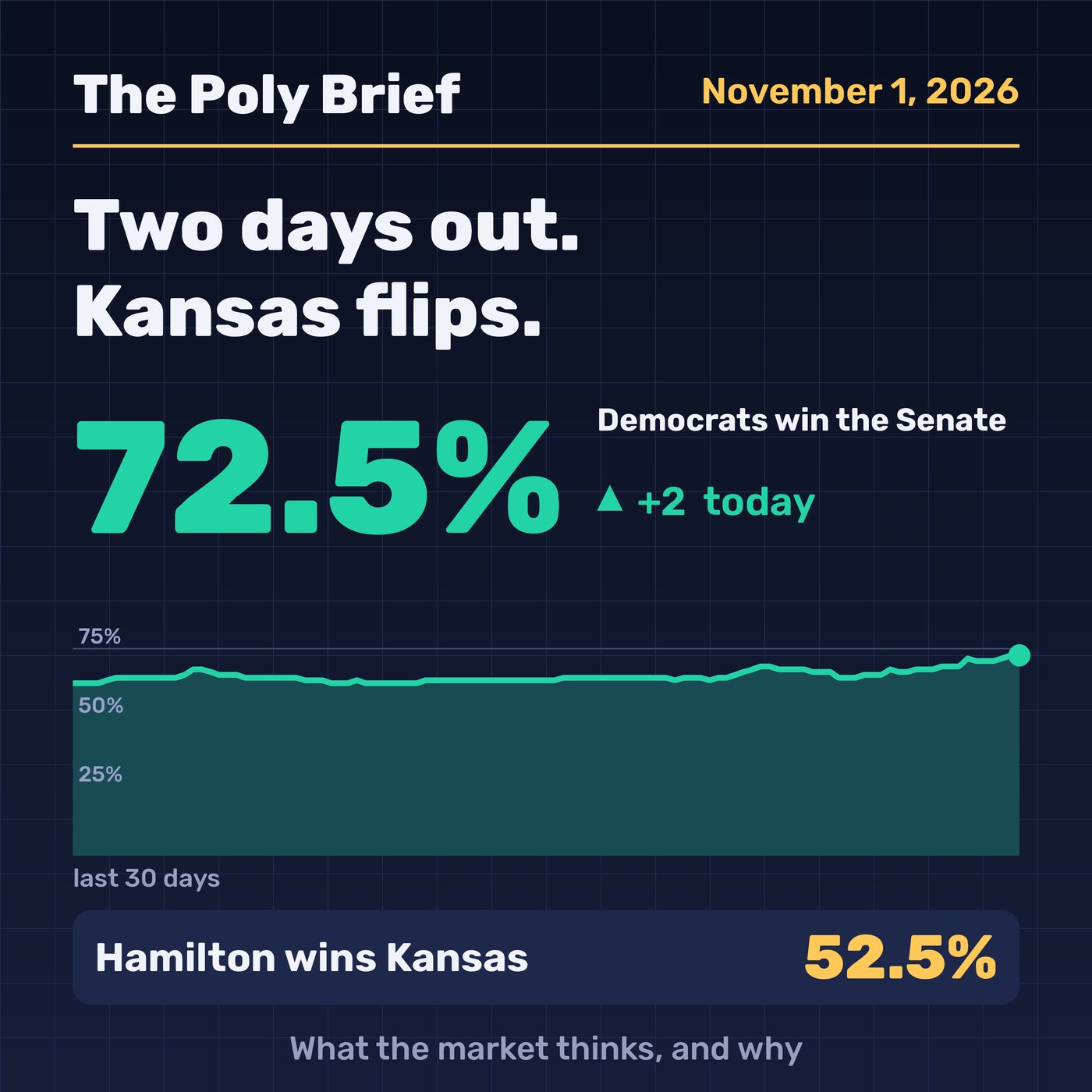
Two days out. Kansas flips.

· 10 min

Nov 1: Two days to the midterms. A $134,000 bet before sunrise in Nebraska, and Kansas flips

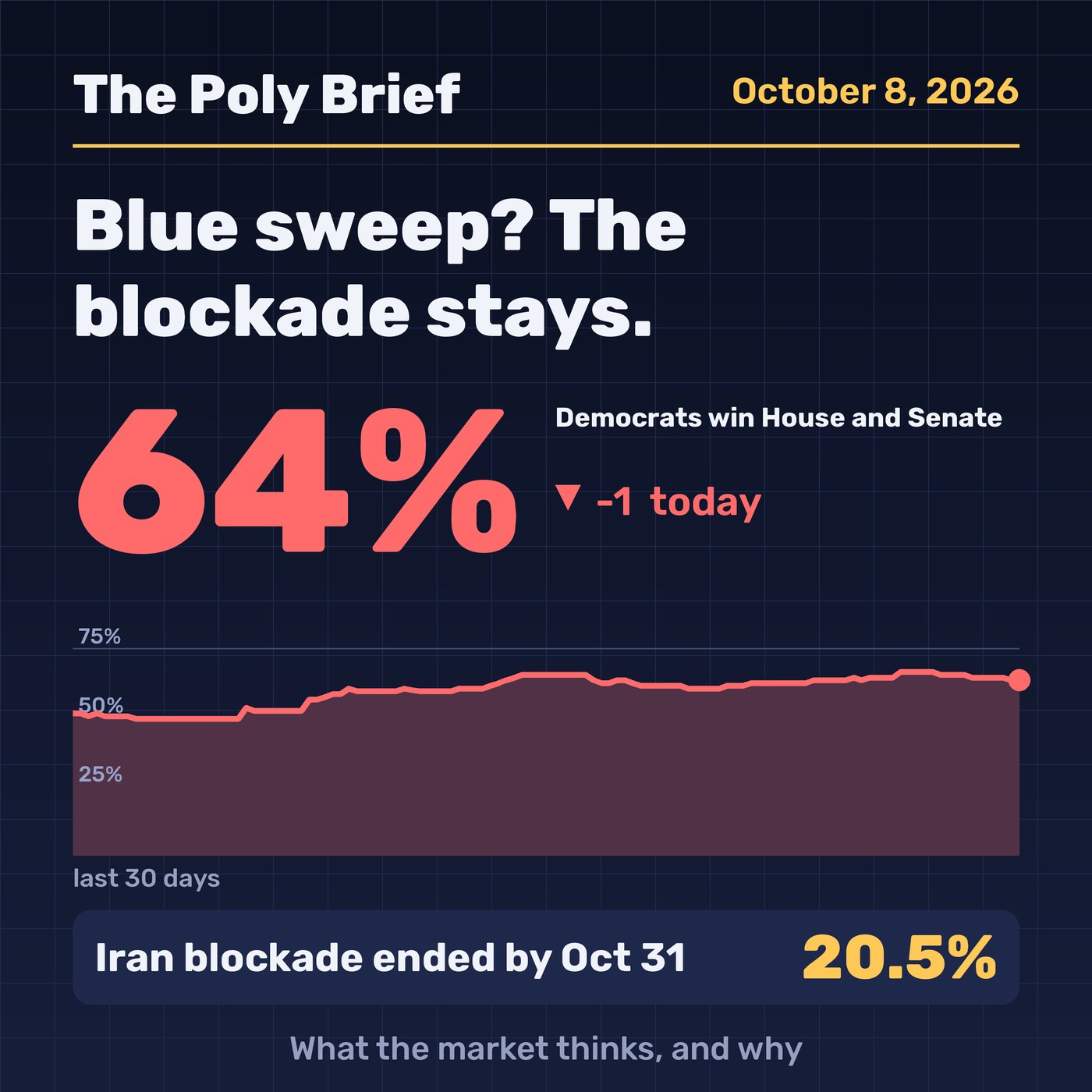
Two days before the US midterms, the market gives Democrats 72.5% to win the Senate, up six points in a week, and 94.5% for the House. Why: a generic ballot around D+8, Trump's approval near 37%, and a record early vote. Then Nebraska, from Polymarket's homepage: Pete Ricketts jumped five points on Saturday, after a New York Times/Siena poll had him up 49 to 43 over independent Dan Osborn. And most of that jump came from one account, about $134,000 in under an hour, around three in the morning New York time.

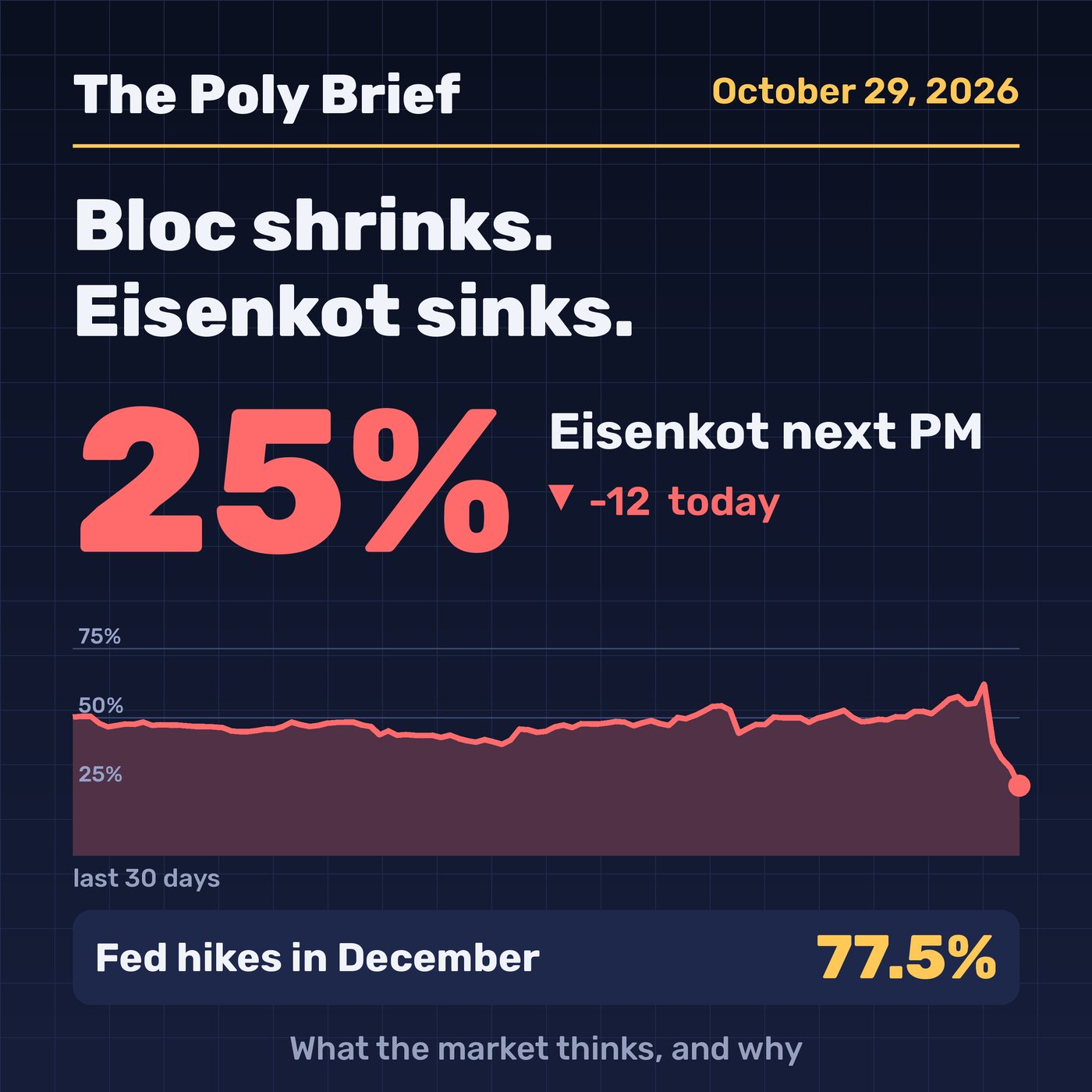
Bloc shrinks. Eisenkot sinks.

· 11 min

Oct 29: The count moved against Netanyahu. The market moved against Eisenkot. And two rate calls we got right

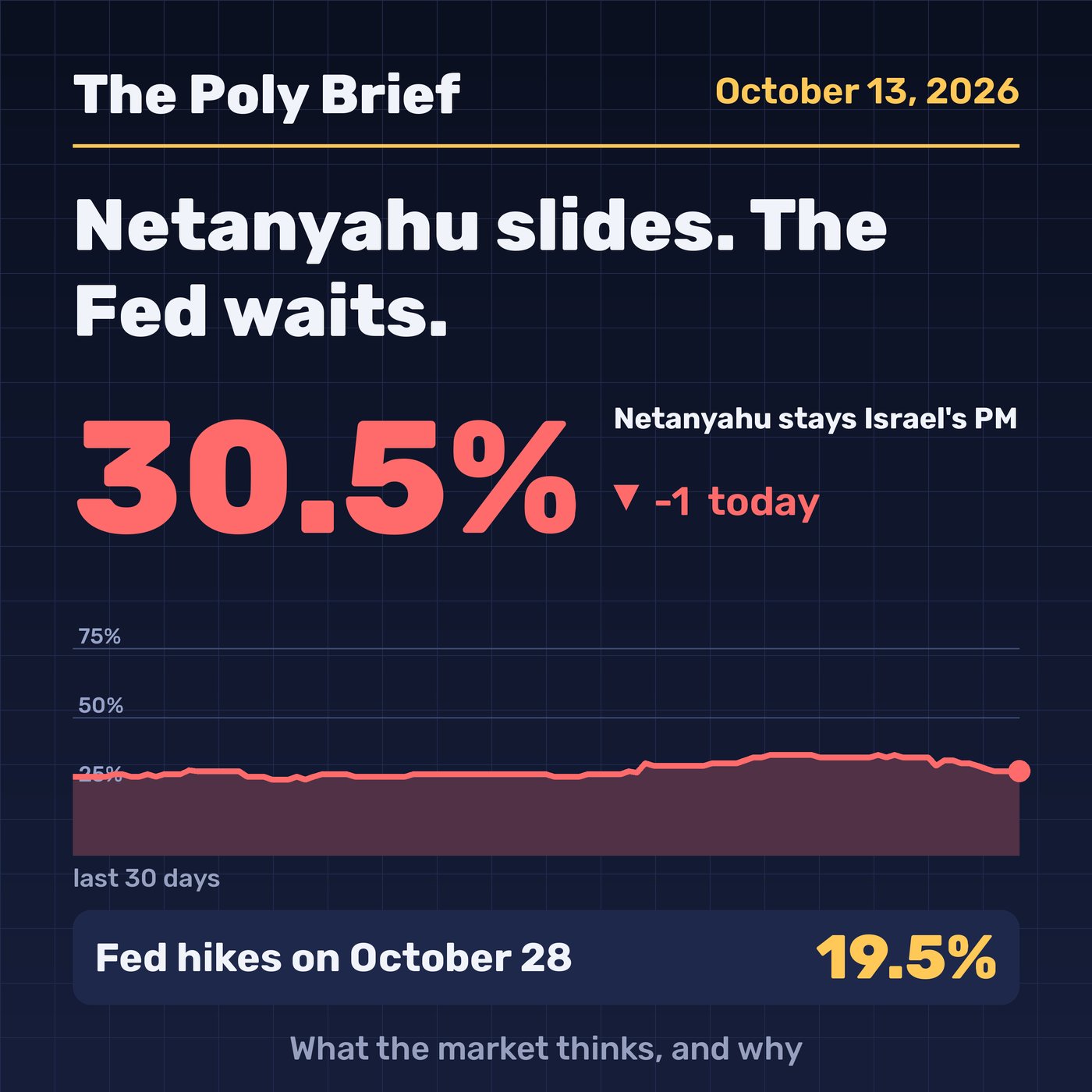
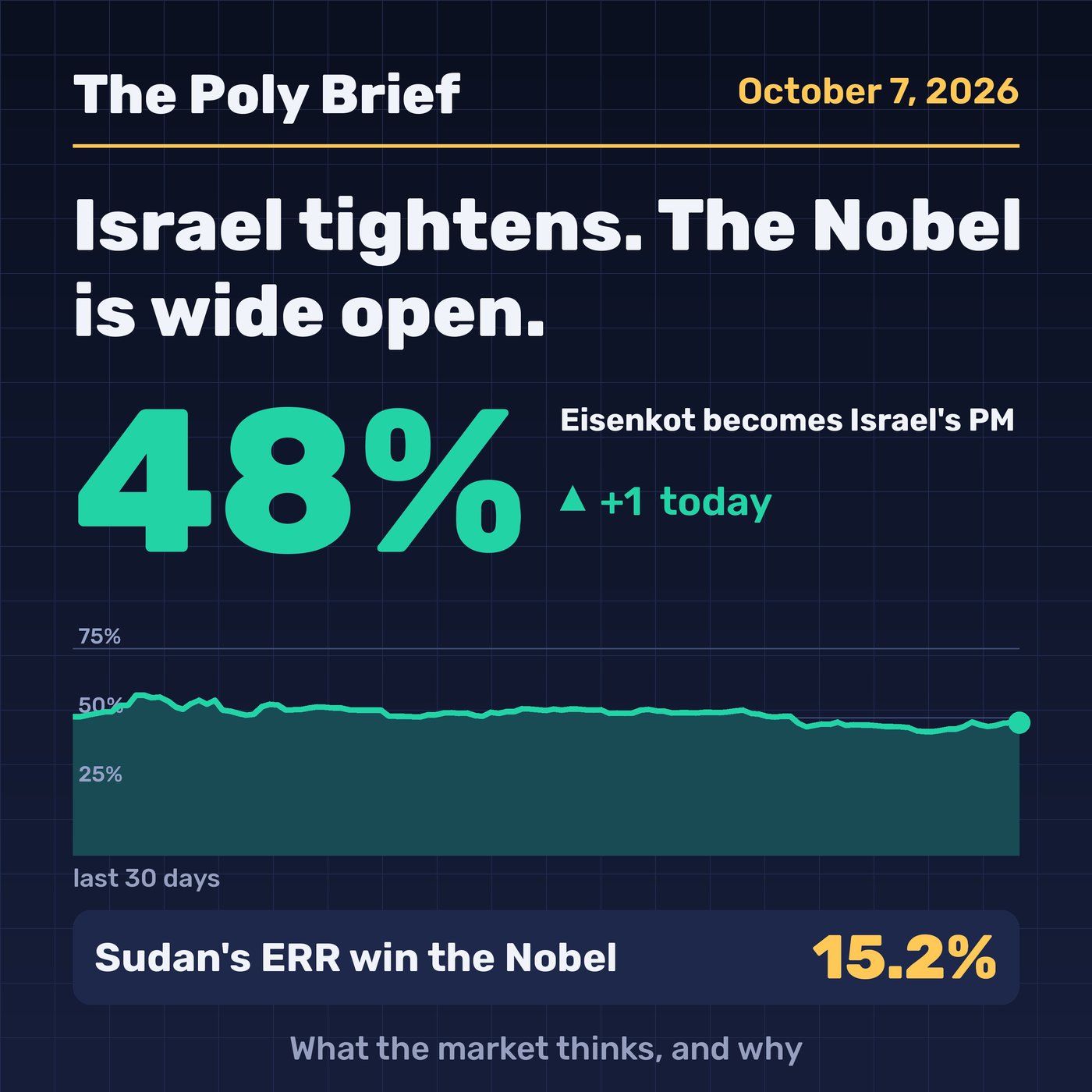
With almost 90% of the votes counted, Netanyahu's bloc fell from 57 seats to 53, and the Arab parties hit a record 19. And yet the market moved the other way: Gadi Eisenkot dropped from 36.7% to 25% to be Israel's next prime minister, while Netanyahu holds at 45.5%. Why: the only route to 61 for Eisenkot runs through the Arab parties, and his own partners have said no. Plus one trade of about $130,000 against him, the scenarios analysts see (an Arab-backed government, a unity government, or another election), and the dates from here.

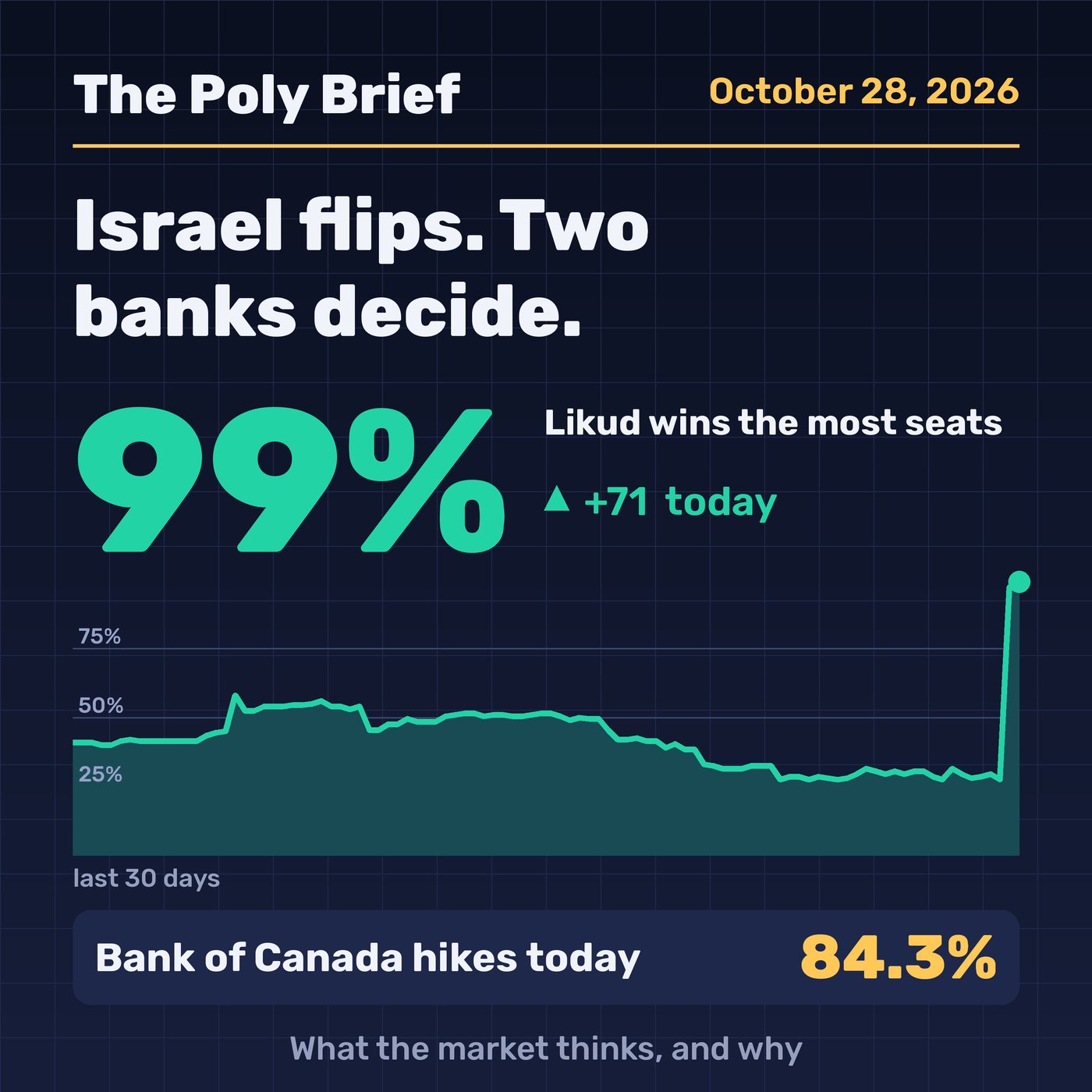
Israel flips. Two banks decide.

· 11 min

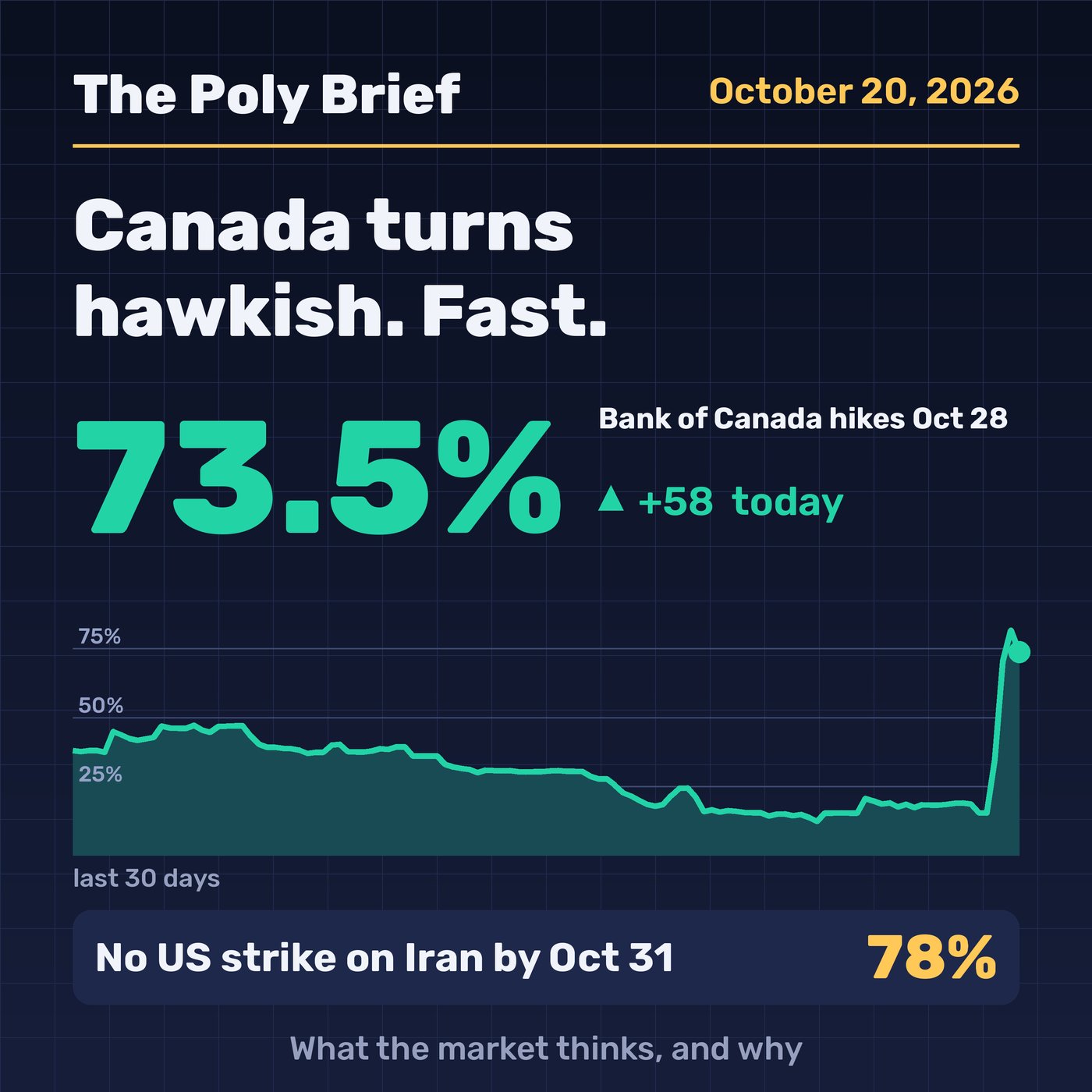
Oct 28: Israel flips overnight, Likud from 28.5% to 99%. And two central banks decide today

Yesterday morning the market gave Gadi Eisenkot's party 71.5% to finish first in Israel's election. This morning Likud is at 99.2%. All three exit polls put Likud on top, and with about 37% of the votes counted, Likud has 28 seats to Eisenkot's 21, and Netanyahu's bloc is at 57. Who called it: the market didn't, and neither did the polls. Netanyahu is now at 46.5% to be the next prime minister, up 20 points, but no bloc is at 61, and the market gives "no majority" 96.7%. Why the price is that low, what the double envelopes could change, and the timeline from here.

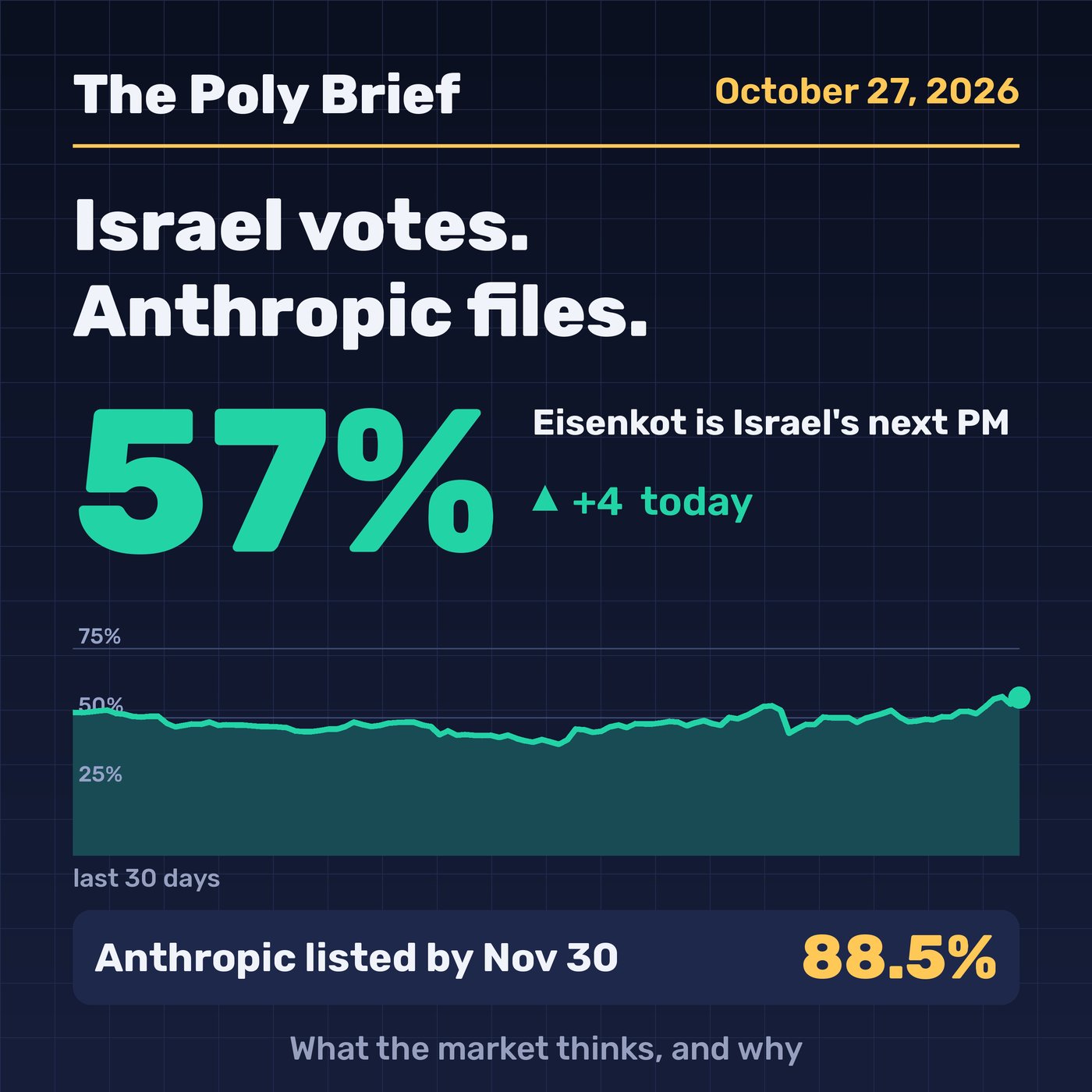
Israel votes. Anthropic files.

· 11 min

Oct 27: Israel votes with Eisenkot at 57%, moved by one trader at dawn. And Anthropic files to go public

Israel votes today, and the market gives Gadi Eisenkot 57% to be the next prime minister, up four points overnight. Netanyahu is at 26.5%, and Naftali Bennett fell from 12.5% to 5.5%. We looked at the actual trades: the dawn jump for Eisenkot was one account spending about $4,900 in five minutes, and Bennett's slide started with a single $15,000 bet. No news explains either. What that says about a $57 million market, the rule that makes a caretaker Netanyahu a non-event, and what to watch tonight. Market figures are not a survey based on recognized statistical methods, and the polls quoted are from Friday and outdated.

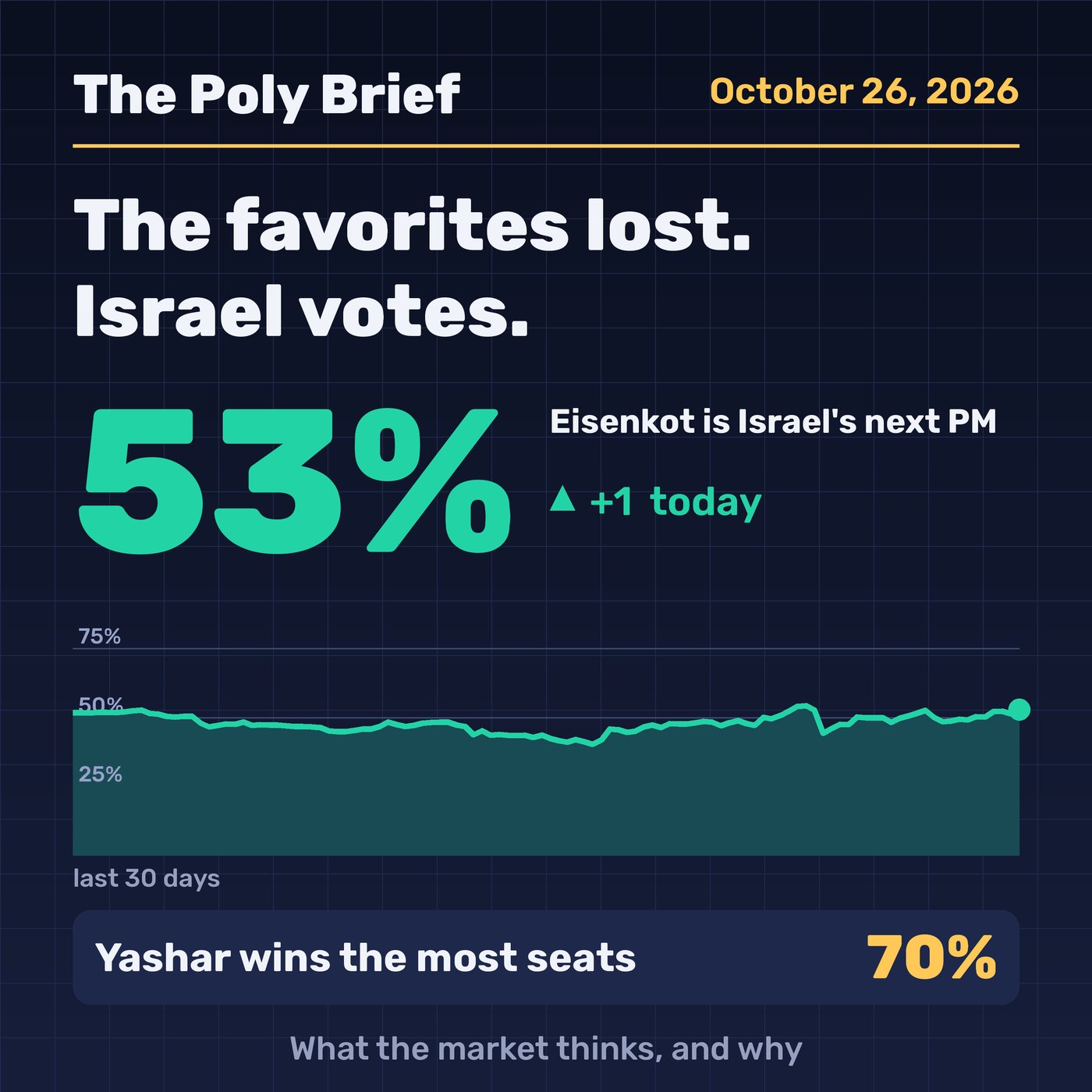
The favorites lost. Israel votes.

· 12 min

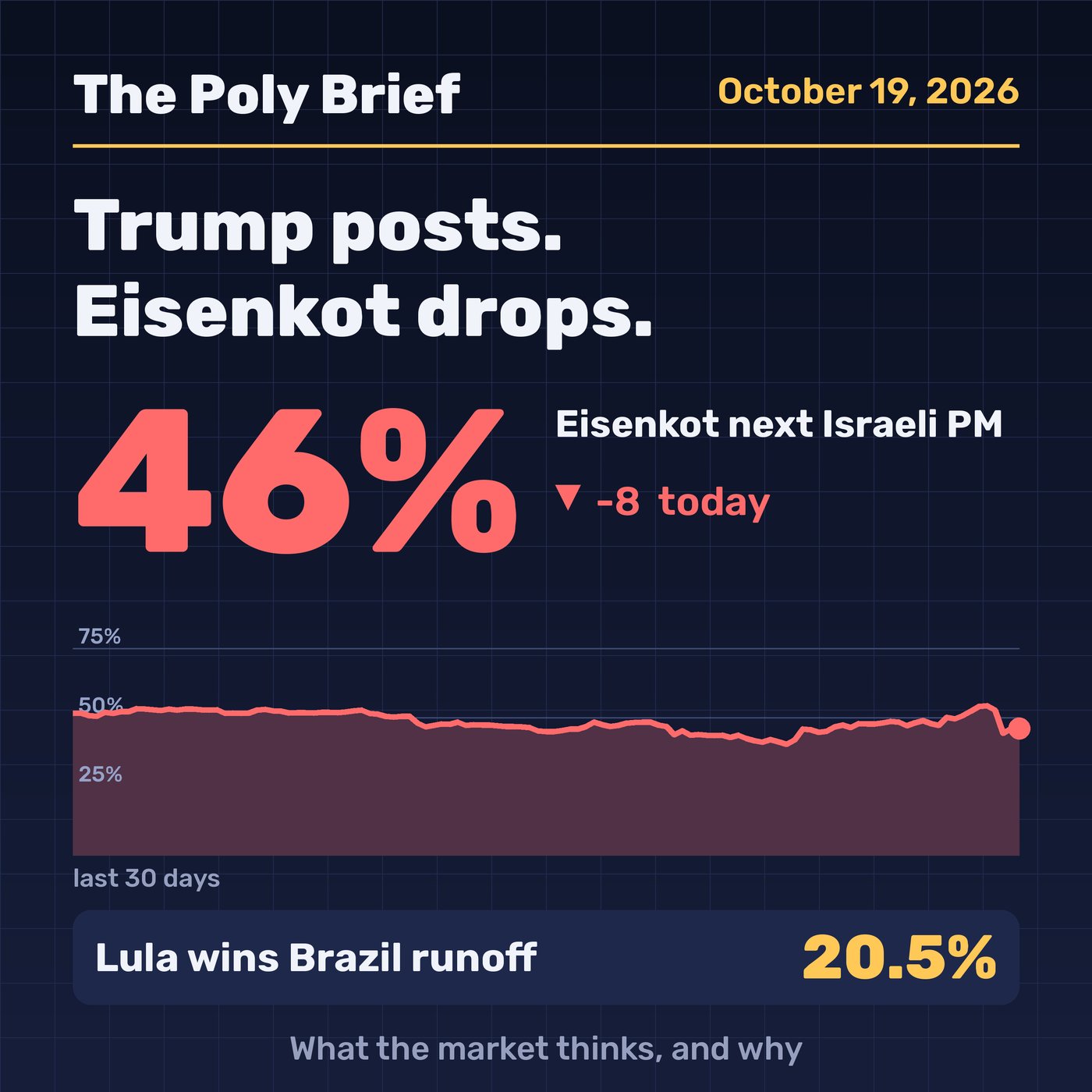
Oct 26: One in five happened twice. Lula and Serbia's students beat the market, and Israel votes tomorrow with Eisenkot at 53%

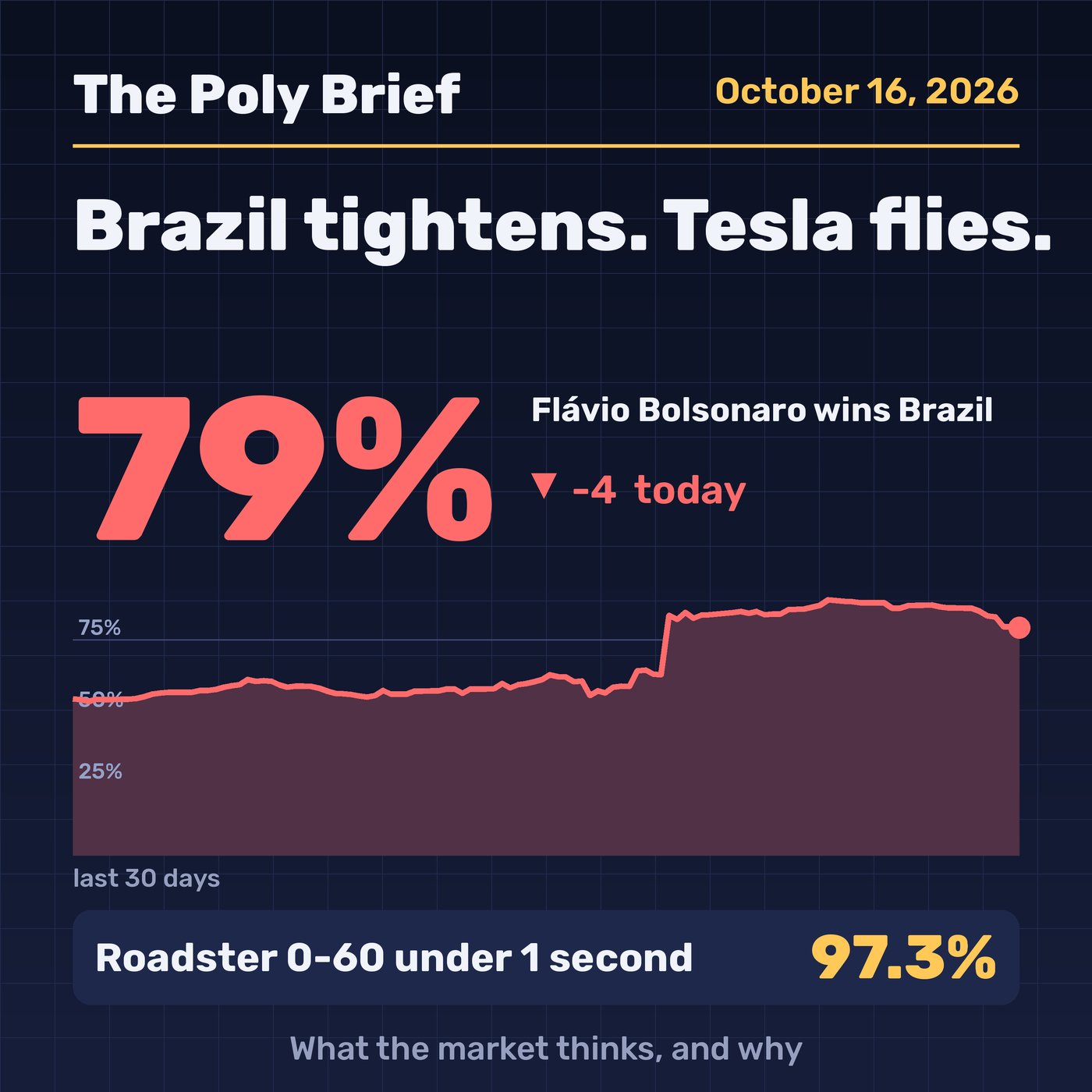
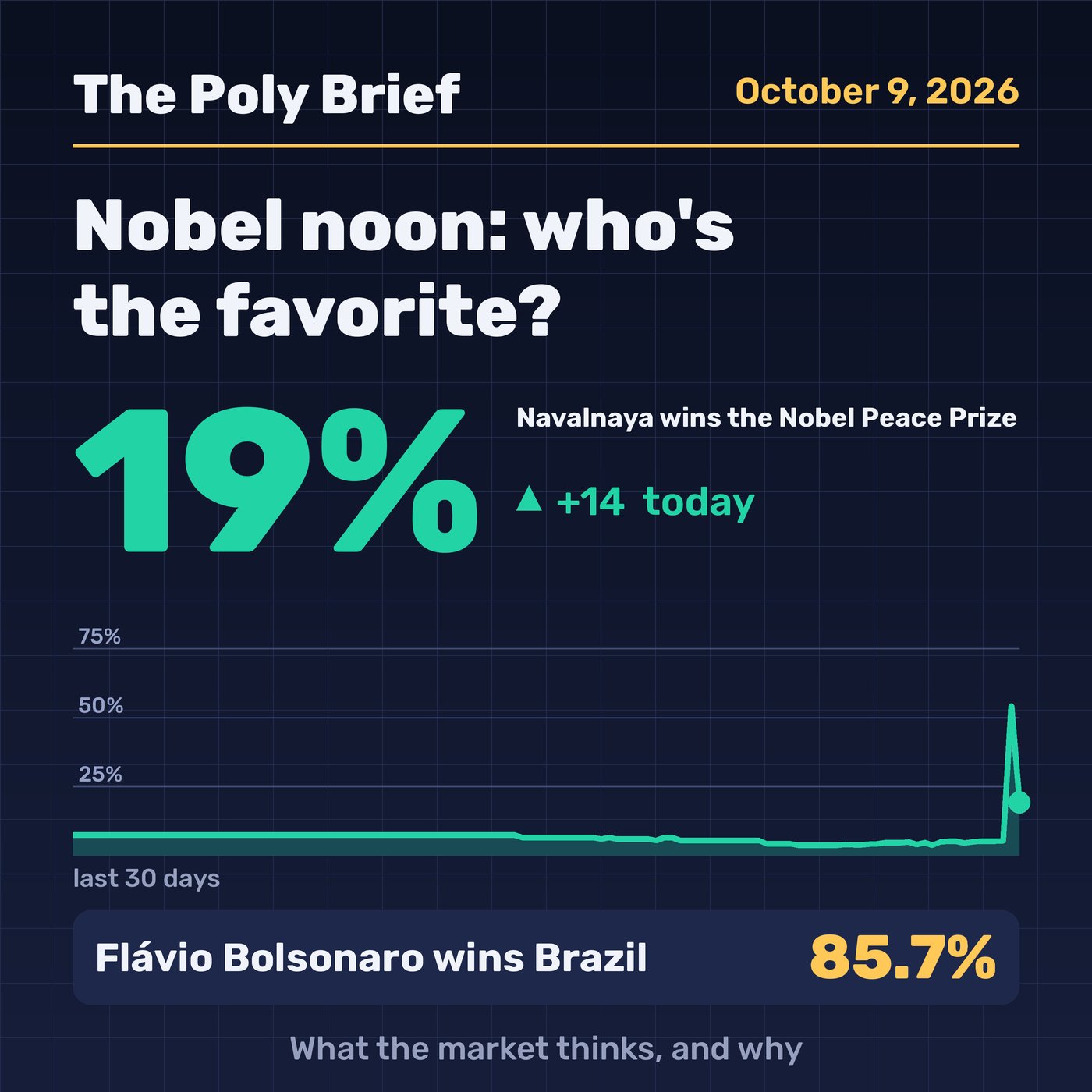
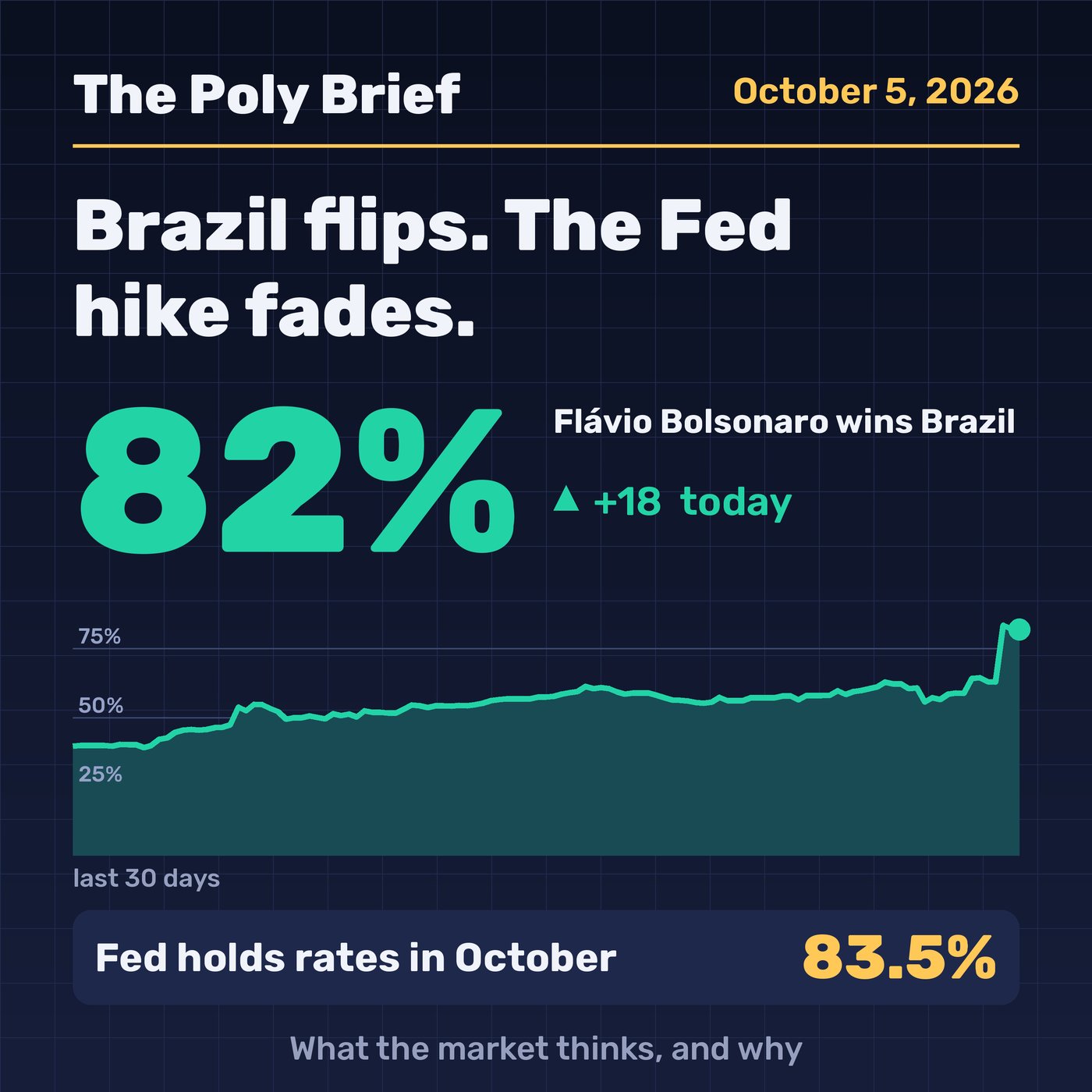
Who called it? Not the market. Polymarket had Flávio Bolsonaro at about 80% in Brazil and Aleksandar Vučić's list at 71.5% in Serbia. Lula won by three and a half points, the first runoff comeback in Brazil's history, and Serbia's student list won a majority as turnout hit its highest level in decades. What the traders bet on, why the polls went the wrong way, and what we got wrong too.

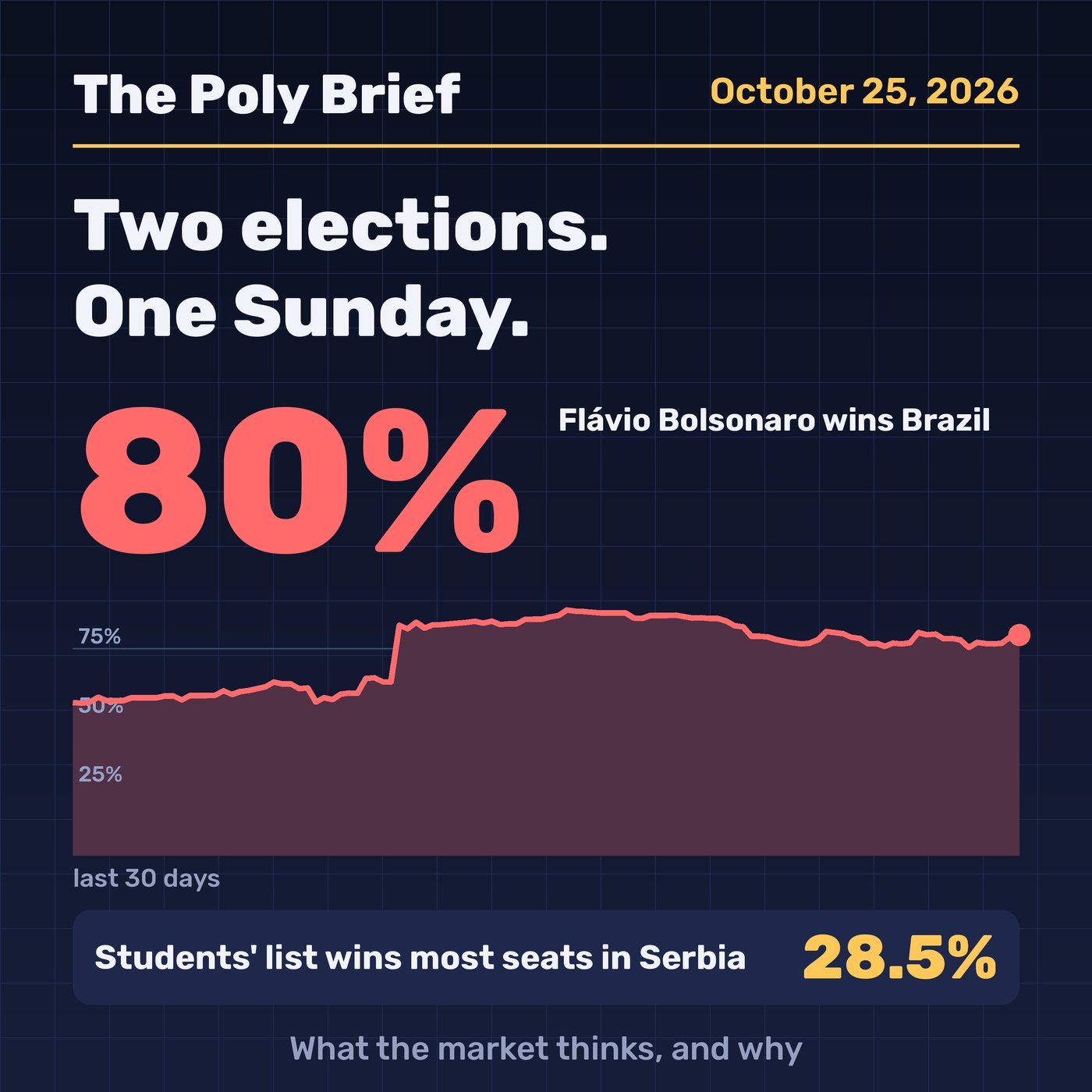
Two elections. One Sunday.

· 11 min

Oct 25: Election Sunday. Brazil's runoff is a coin flip in the polls and 80% on the market, and Serbia votes after two years of student protests

Brazil votes in its presidential runoff today. Every final poll has Flávio Bolsonaro ahead of Lula by one or two points of valid votes, inside the margin of error. The market gives Flávio almost 80%. Why traders are so much more confident than the pollsters: the first round, a poll miss, endorsements, and a record no runner-up has ever broken. And what keeps Lula alive.

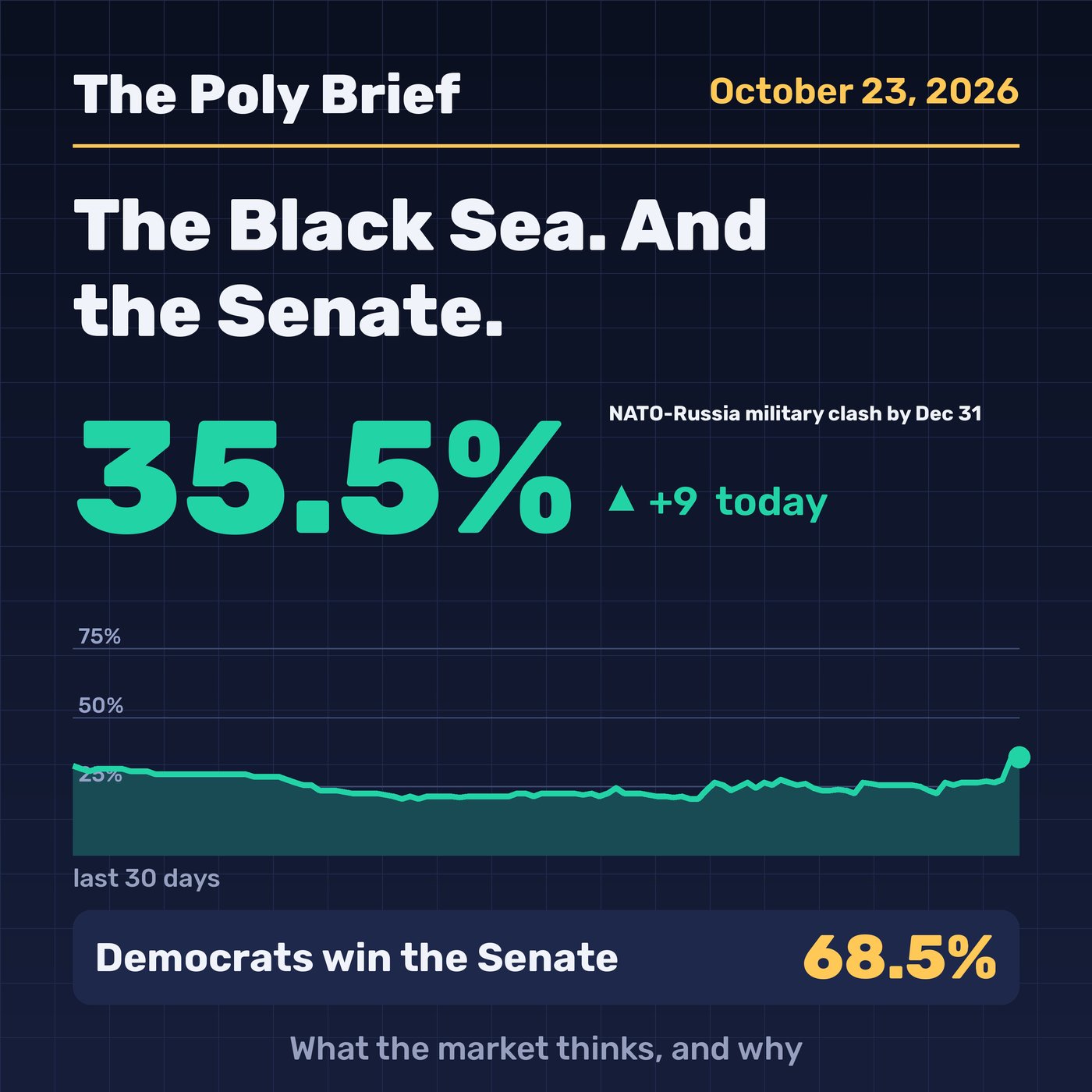
The Black Sea. And the Senate.

· 11 min

Oct 23: Drones over the Black Sea, the NATO-Russia clash market jumps ten points, and the Senate market wakes up

Seven cargo ships hit off Romania and Bulgaria in two weeks, about thirty sailors dead or missing, and Romania's top defence council meeting on Thursday evening. In the hours before it met, the market on a NATO-Russia military clash by October 31 jumped from 8.5% to 18.5%. Why traders are nervous, and why the fine print has said No every time so far, including when Poland shot down Russian drones in 2025.

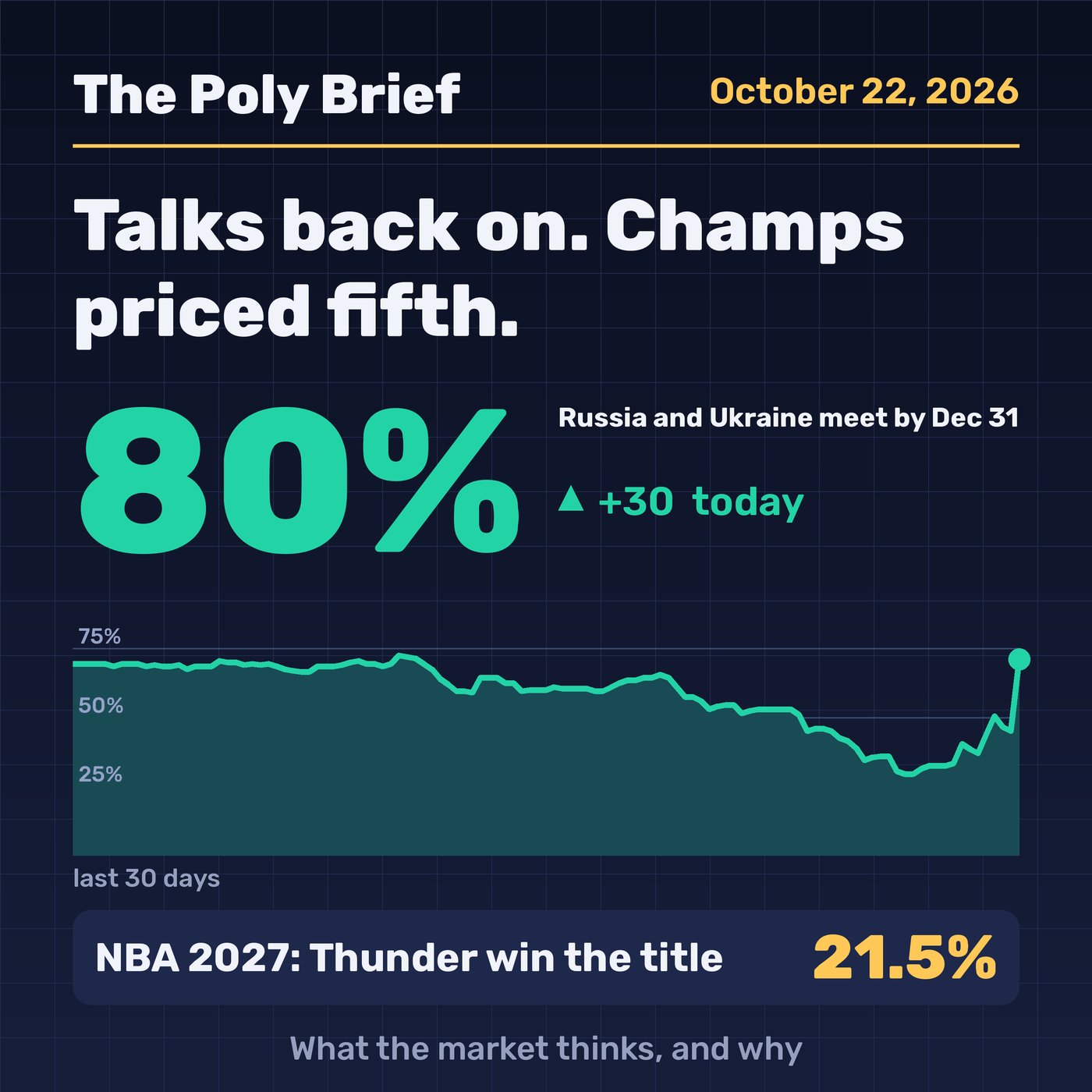
Talks back on. Champs priced fifth.

· 11 min

Oct 22: Putin says 'around November tenth', the talks market jumps 30 points, and the NBA champions are priced fifth

After a three hour meeting with Trump envoy Steve Witkoff, the Kremlin said Putin is ready "in principle" to resume three way talks with Ukraine and the US around November 10. Within three hours, the market on Russia and Ukraine meeting by the end of the year jumped from 44.5% to 73.5%, and it's at 80% now. Why every date on the table is in November, why traders aren't buying a ceasefire, and why talks have stalled before.

About the show

The Poly Brief picks the one or two biggest moves on the board each morning, shows where the odds stand and how they shifted, and answers the question that actually matters: why is the market betting this way? What happened in the news, what's driving it, and what could still flip it.

Maya and Daniel, ten minutes, every day. Every number is backed by reporting, and every source is linked in the episode notes.

Not investment advice and not a recommendation to bet. Odds are prices, not prophecies. Independent, not affiliated with Polymarket.